 Utlu
Everything in Utlu.
Five tabs at the bottom of the screen: Quran, Listen, Hifz, Learn and Maqam. Here is what is inside each one.
Quran and Recite
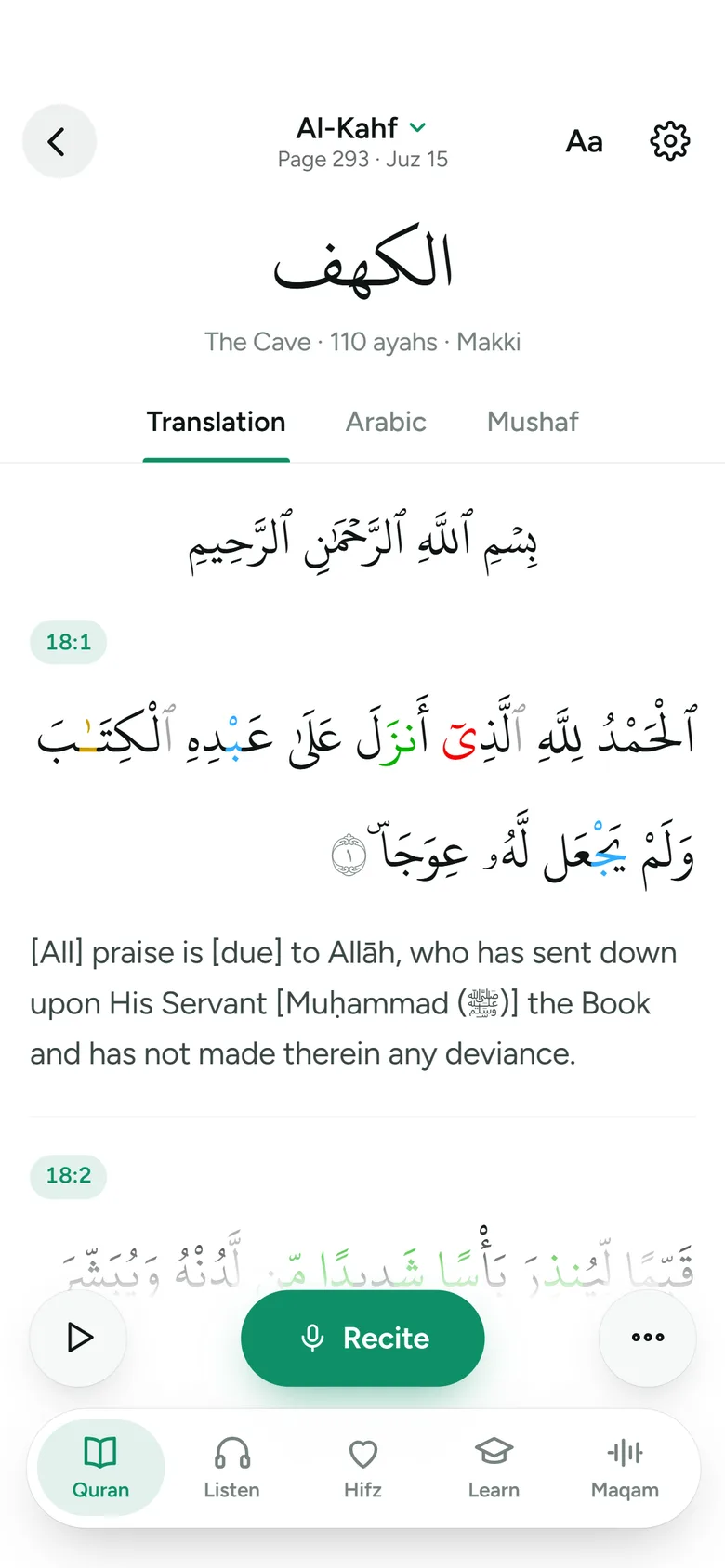
Utlu opens where you left off, in the view most people read in: each ayah in Arabic with its translation underneath. Switch to Arabic only, or to the printed mushaf page.
- Recite. Tap the green button and read aloud. The word you are on lights up and the page scrolls with you. Stop, start again, or jump ahead, and it finds you.
- Three ways to read. Translation, Arabic, and the 604-page Madani mushaf in the King Fahd Complex script.
- Eight riwayat. Besides Hafs, read the King Fahd Complex mushafs of Warsh, Qalun, Shu'bah, Ad-Duri, As-Susi, Al-Bazzi and Qunbul, page by page. Recite, tajweed and tafsir follow Hafs.
- Tajweed colours. One switch colours the rules on every screen. Tap a coloured letter to see which rule it is.
- Tafsir and translation. Tap any ayah for its tafsir, from eight works kept in the app. The English translation is Saheeh International.
- Search and go to. Find any word, or jump to a surah, juz or page.
- Offline. The text, the mushaf and Recite all work without a connection.
Hifz
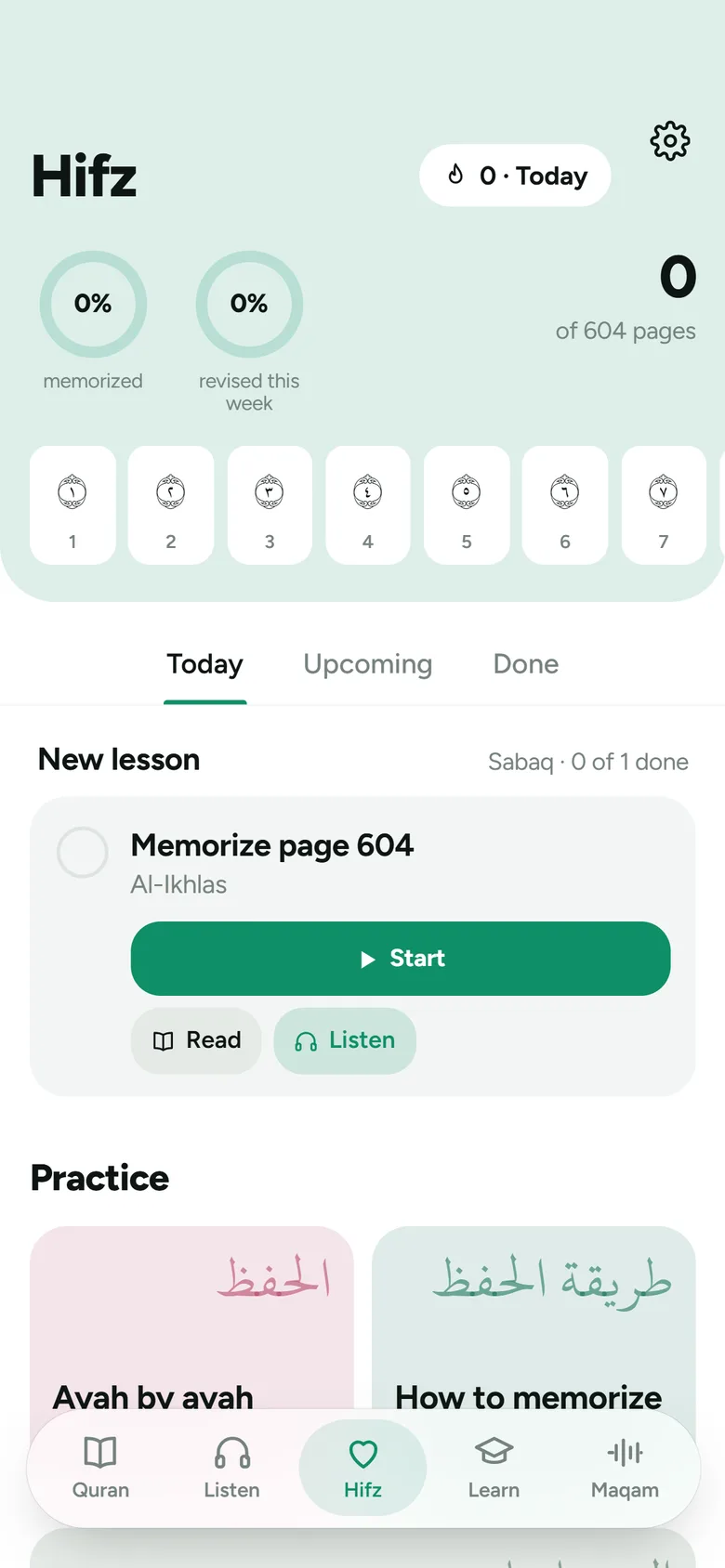
Memorize page by page with a plan built around your goal and the time you have each day: the whole Quran, Juz 'Amma, a few surahs, or keeping what you know.
- A test that stops you. The words are hidden. Each one appears as you say it. A wrong word shows in red, a word you left out shows in amber, and the test stops on it so you can read it and try again.
- Today, Upcoming and Done. Your new lesson, your recent pages and your older revision, with Read, Listen and Test on each.
- Ayah by ayah practice. Hear an ayah, say it back, then add the next.
- Progress at a glance. Rings for this week and a shelf of all 30 juz.
Maqam
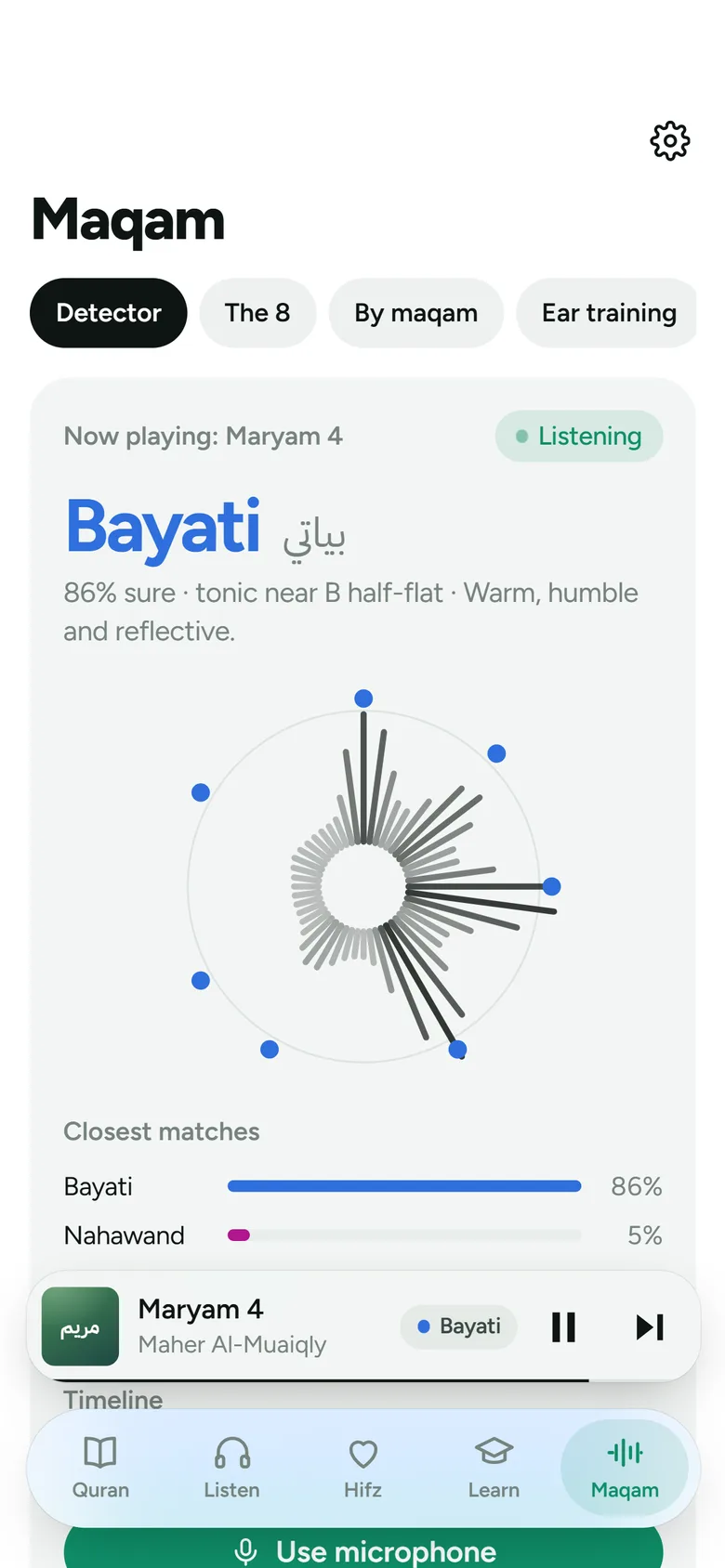
The maqamat are the melodic modes reciters move through. Utlu hears them for you, then teaches you to hear them yourself.
- Detector. Play any recitation in Utlu, or use the microphone near one, and it names the maqam live, how sure it is, and where the tonic sits.
- The eight. Bayati, Saba, Hijaz, Rast, Nahawand, Sikah, Ajam and Kurd, each with its mood and real recitations to hear it in.
- By maqam. Recitations grouped by the maqam they are in.
- Ear training. Listen and name the maqam, a few minutes at a time.
- Hear an ayah in a maqam. Tap any ayah to hear reciters who read it in each maqam.
Imitate
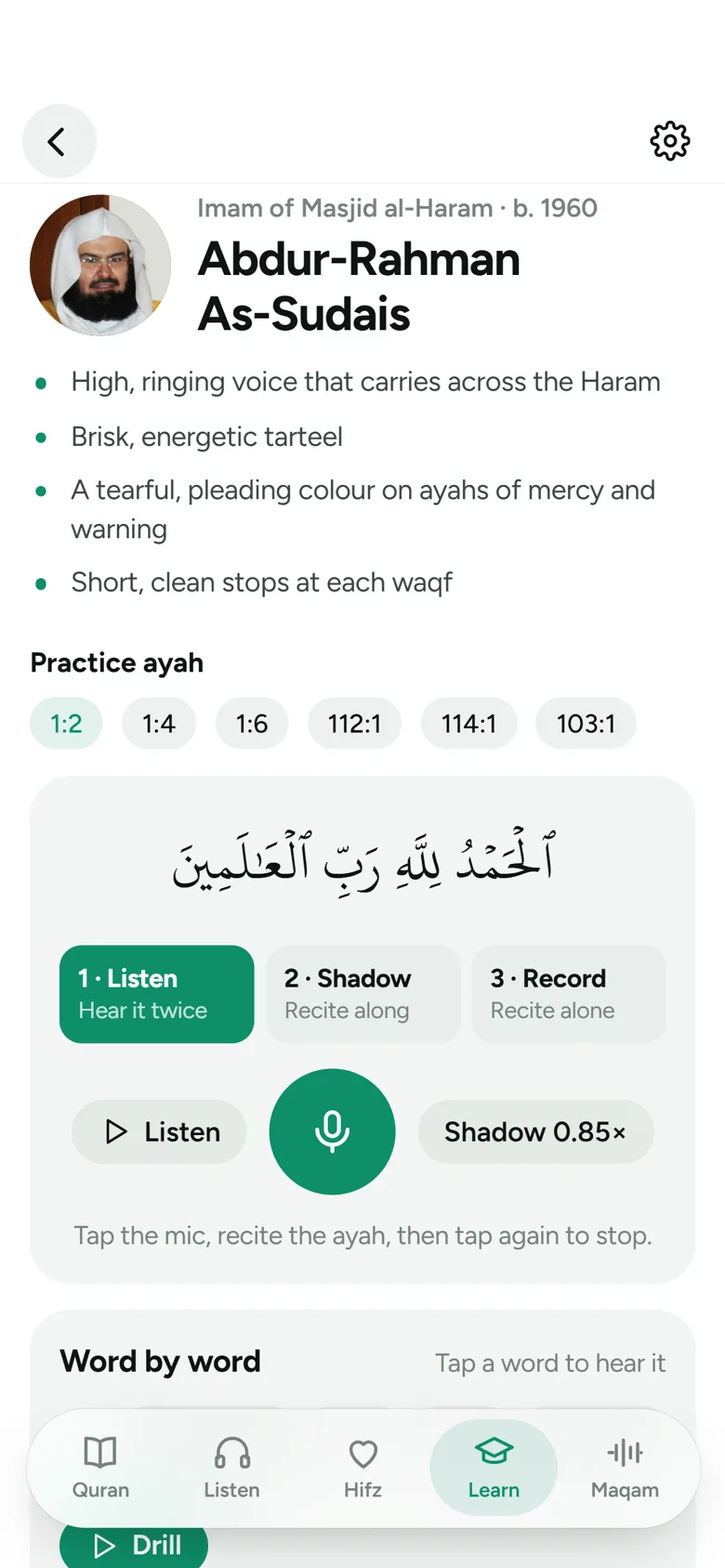
Learn a reciter's style ayah by ayah, with the Imams of the Haramain and the great masters.
- Twelve reciters. Sudais, Shuraim, Maher al-Muaiqly, Juhany, Dossari, Budair, Hudhaify, Ali Jaber and Muhammad Ayyub, with Mishary Alafasy, Al-Husary and Al-Minshawi.
- Listen, shadow, record. Hear the ayah, recite along at a slower speed, then recite it alone.
- Your pitch line on his. See where your melody rises and falls next to the reciter's, scored for melody, pace and range, with a tip on what to change.
- Word by word. Tap a word to hear it, or drill each word and have it scored.
- Who do you sound like? Recite Al-Fatihah and meet the reciters closest to your voice.
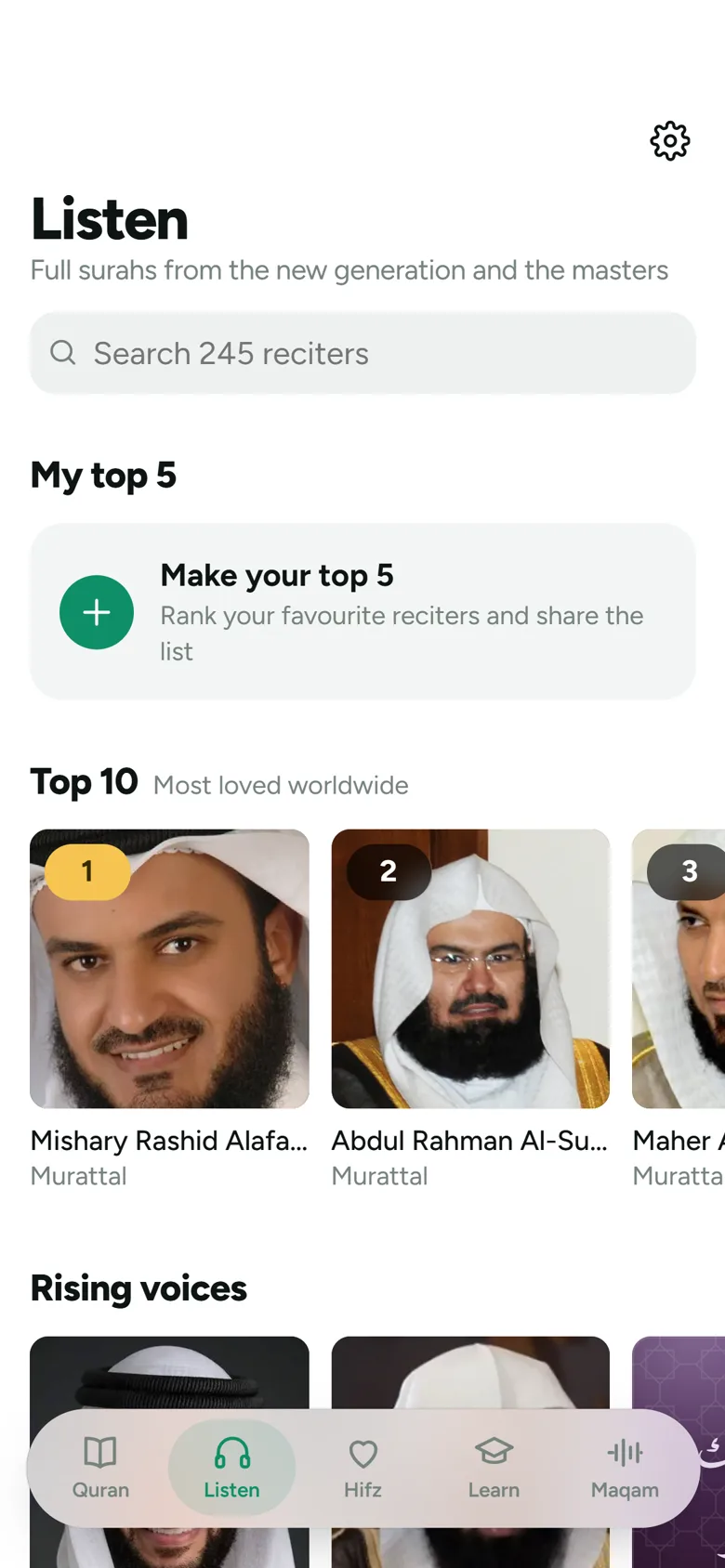
Listen
Full surahs from 245 reciters, from the masters to the new generation.
- Read along. On many recordings the words light up as the reciter says them.
- Other riwayat. Recordings in Warsh, Qalun and more, next to the mushaf of the same riwayah.
- Your top five. Rank your favourite reciters and share the list.
- Keeps playing with the screen off, with controls on the lock screen.
Learn
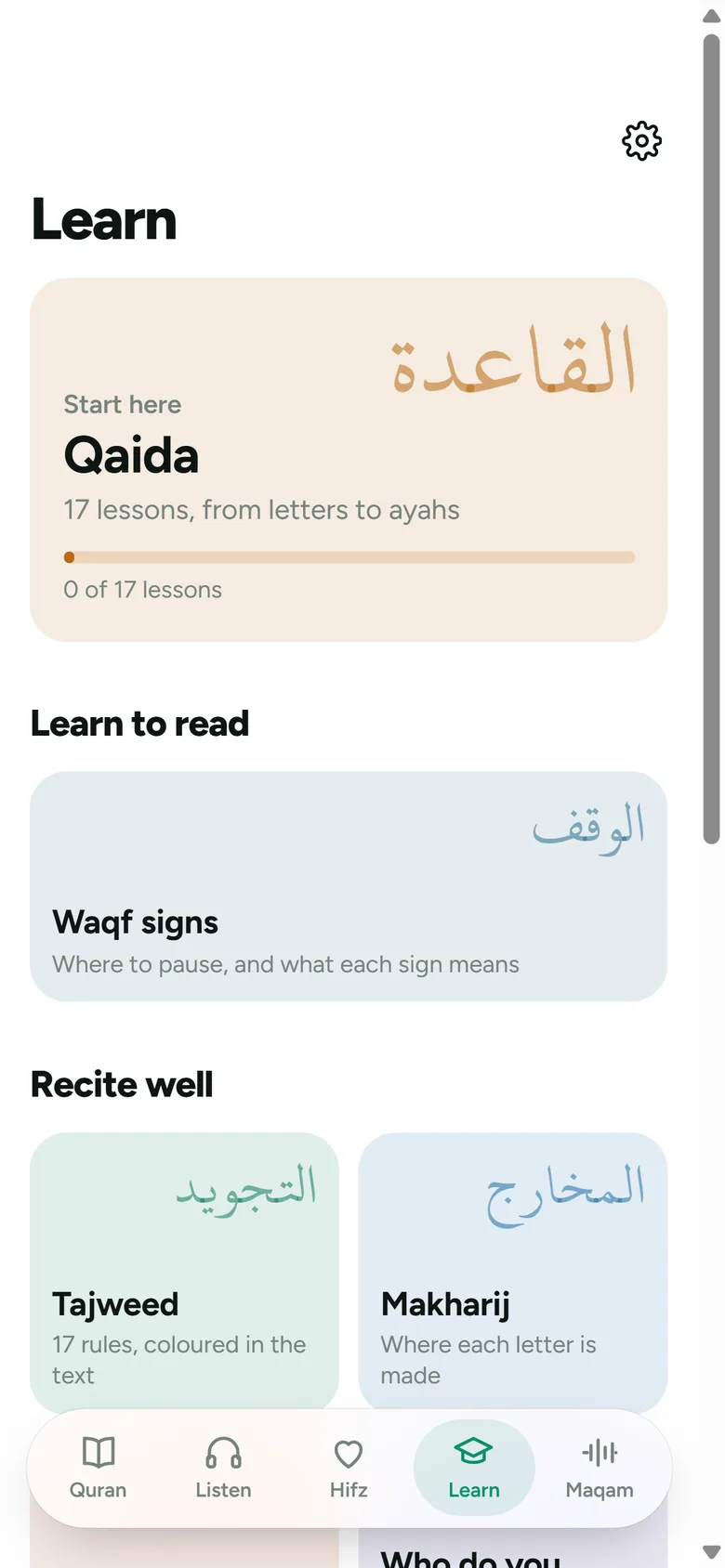
Short lessons for reading the Quran well, from the first letter to the classical texts.
- Qaida. 17 lessons, from the letters to reading whole ayahs.
- Tajweed. 17 rules, each coloured in the text so you see it as you read.
- Makharij. Where each letter is made.
- Waqf signs. Where to pause, and what each sign means.
- Mutashabihat. Ayahs that are easy to mix up, side by side.
- Mutoon. Tuhfat al-Atfal, Al-Jazariyyah, Ash-Shatibiyyah, Ad-Durrah and At-Tayyibah.
- Test yourself. Continue the ayah from what you hear, and a Quran quiz with sources.
Questions
When can I get it?
Utlu comes to the App Store on 10 December 2026. Join the launch list and we will email you that day.
Which phones does it run on?
iPhone with iOS 16.4 or later. There is no Android version yet.
Does Utlu record my voice?
No. Recite and Hifz listen on your iPhone as you read, and your voice is never recorded or uploaded. There are no ads and you do not need an account.
Does it work without internet?
Yes for reading, the mushaf, tafsir, Recite and Hifz. Streaming a reciter needs a connection unless you have downloaded that reciter.
How good is the maqam detector?
It is strongest on clear, solo murattal recitation. It gives an early guess first, marked Probably, and names a maqam only once it is fairly sure. Reciters often move between maqamat, so the timeline shows each change.
Which riwayat can I read?
Hafs 'an 'Asim, plus the King Fahd Complex mushafs of Warsh, Qalun, Shu'bah, Ad-Duri, As-Susi, Al-Bazzi and Qunbul. Recite, Hifz, tajweed colours and tafsir work in Hafs.
Be there on launch day.
Leave your email and we will tell you the day Utlu reaches the App Store.
One email at launch, and only news about Utlu after that. Privacy